
Clinical review pending. This article has not yet been reviewed by a licensed clinician, and we would rather say so than print a name that does not exist.
What this is about
Two numbers keep showing up in longevity research: VO2 max, a measure of how much oxygen your body can use during hard exercise, and grip strength, a simple squeeze test that reflects whole-body muscle function. Both are strong population-level markers of healthspan. The 2026 European Society of Cardiology guideline on cardiac rehabilitation treats VO2 peak as a key endpoint, and grip strength is widely used in geriatric research as a marker of overall muscle function and frailty risk.
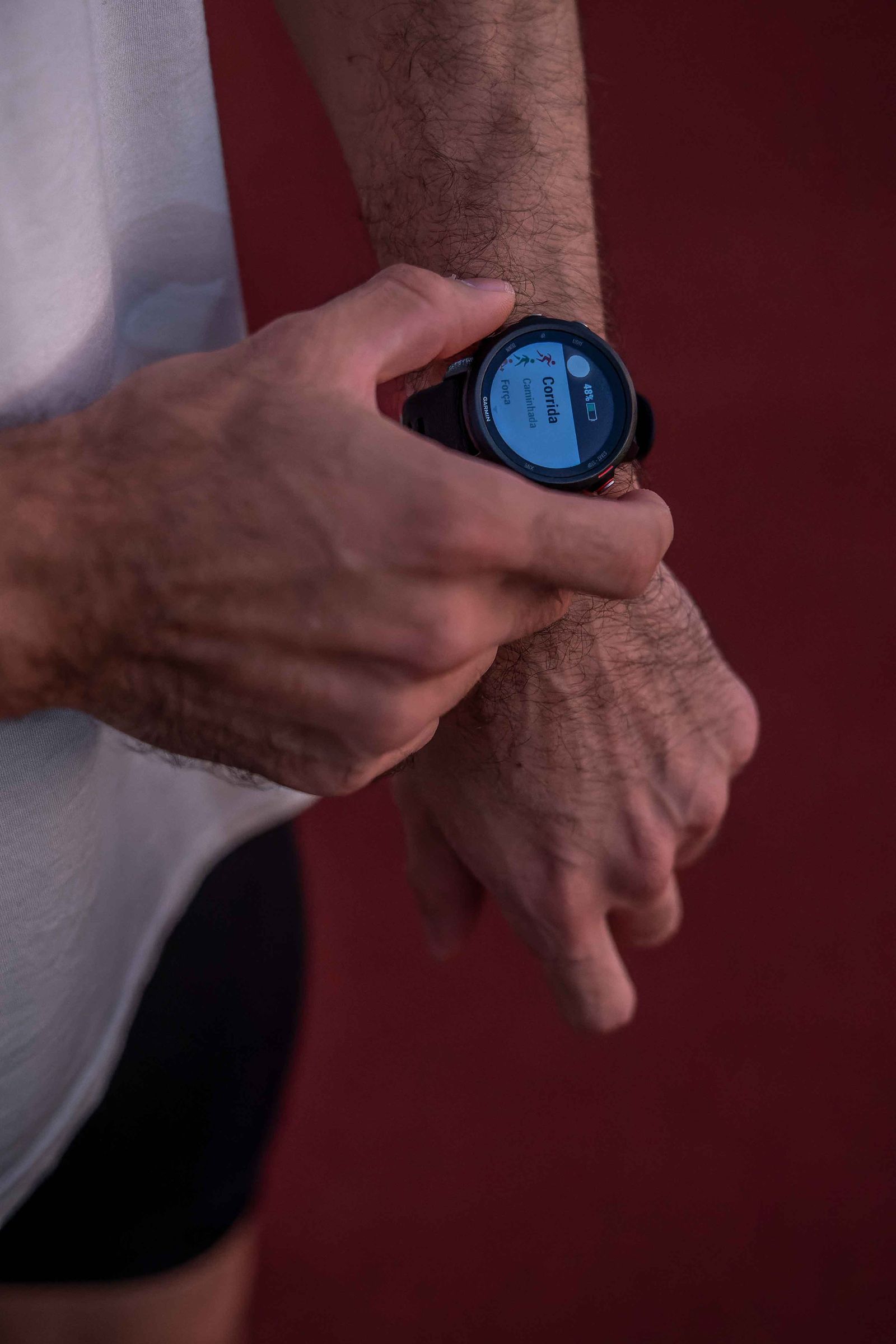
The catch is that most people now try to track these values through a wrist-worn device. Wearables are useful, but they are measuring proxies, not the real thing. Understanding the difference changes how you interpret your data.
Why it matters
Here is what current wearables genuinely do well. They capture heart rate, heart rate variability, activity volume, pace, and in some cases ECG and oxygen saturation. The ESC guideline explicitly supports self-operated wearable sensors for recording ECG, physical activity, cuff-based blood pressure, and oxygen saturation in cardiac rehab patients. Over weeks and months, wearables can show whether your exercise dose is climbing, whether your heart rate response to a given workload is improving, and whether recovery patterns are trending in the right direction.
Some devices also produce a VO2 max estimate from motion and heart rate data. That estimate can be useful for spotting trends, but it is not a direct measurement. The ESC guideline still identifies cardiopulmonary exercise testing, which measures gas exchange during maximal exercise, as the gold standard for assessing global functional capacity.
Grip strength is a different story. It is a force measurement, taken with a hand dynamometer. Standard wearables do not measure it. The ESC guideline points to the one-repetition maximum as the appropriate assessment for strength in rehab, which reinforces that strength testing needs its own dedicated tools. A wearable also cannot tell you whether more activity has translated into more actual muscle strength, unless you do a separate resistance test.
So the honest read is this: wearables are excellent continuous monitors and trend detectors. They are not substitutes for formal testing when you want a real baseline or a meaningful follow-up number.
Lifestyle levers
If healthspan is the goal, the levers are less exotic than the technology suggests.
- Build aerobic base. Regular sessions at conversational intensity develop the cardiovascular machinery that VO2 max reflects. Your wearable can track whether your weekly aerobic minutes are actually going up.
- Add higher intensity work. Shorter, harder efforts are what tend to move maximal aerobic capacity. Watch how your heart rate response to a repeated workload changes over time. Falling heart rate at the same pace is a good sign.
- Train strength directly. Since wearables cannot measure grip or overall strength, you need to plan for it. Resistance training that challenges major movement patterns, and progressively gets harder, is the input that matters.
- Test what you cannot see. A hand dynamometer is inexpensive. Periodic grip testing at home gives you a real number to trend. For VO2 max, a cardiopulmonary exercise test at a sports medicine or cardiology clinic gives you the clinical value.
- Use the wearable for what it is good at. Recovery signals, activity consistency, resting heart rate trends, and heart rate variability patterns are all legitimate feedback loops. Treat the estimated VO2 max as a rough trend line, not a verdict.
Discuss with your clinician
If you have a cardiovascular history, or if you are older and thinking about starting harder training, formal exercise testing is worth a conversation. A clinician can help you decide whether a cardiopulmonary exercise test makes sense, interpret grip strength in the context of your overall function, and set training targets that reflect your actual baseline rather than an algorithm's estimate. Wearable data is a useful input to that conversation, not a replacement for it.
This is general education, not advice for you. It does not diagnose, treat or recommend anything for your situation. Talk with a licensed clinician about what applies to you, especially before changing anything if you have an existing condition or take medication.
References
- Bäck M et al. "2026 ESC Guidelines on cardiac rehabilitation." European Heart Journal, 2026.
- Køber L et al. "2026 ESC Guidelines for the management of heart failure." European Heart Journal, 2026.
- Chen K et al. "CardioGene: a comprehensive and integrative post-GWAS resource for exploring the genetic basis of cardiovascular diseases." Cardiovascular Research, 2026.
- Bai B et al. "Aerobic exercise attenuates peri-infarct fibrosis and improves fitness early after acute myocardial infarction: a randomized trial." European Heart Journal, 2026.
- Escamilla-Ugarte R et al. "Effects of different types of exercise on pain thresholds in patients with chronic low back pain: a crossover randomized placebo-controlled clinical trial." Pain Medicine, 2026.
- Lee SH et al. "Microvascular resistance reserve and cardiovascular outcomes: the FLOW-CMD registry." European Heart Journal, 2026.
These are public, peer reviewed sources about the underlying physiology. They are not studies of SiriusRx and they do not describe results anyone should expect from us.